Student Differentiation
Differentiation in my Physical Education classes involves intentionally adjusting instruction, activities, equipment, grouping, space, rules, and levels of teacher support so that every student—regardless of skill level, experience, disability, or learning profile—can participate meaningfully and progress toward the lesson objectives.
It is not about lowering expectations; rather, it ensures that all students can access the same learning outcomes through multiple pathways while promoting safety, success, and motivation.
Below are several key models and strategies I use to implement effective differentiation in my classes.
Differentiating by Skill Level (Tiered Tasks)
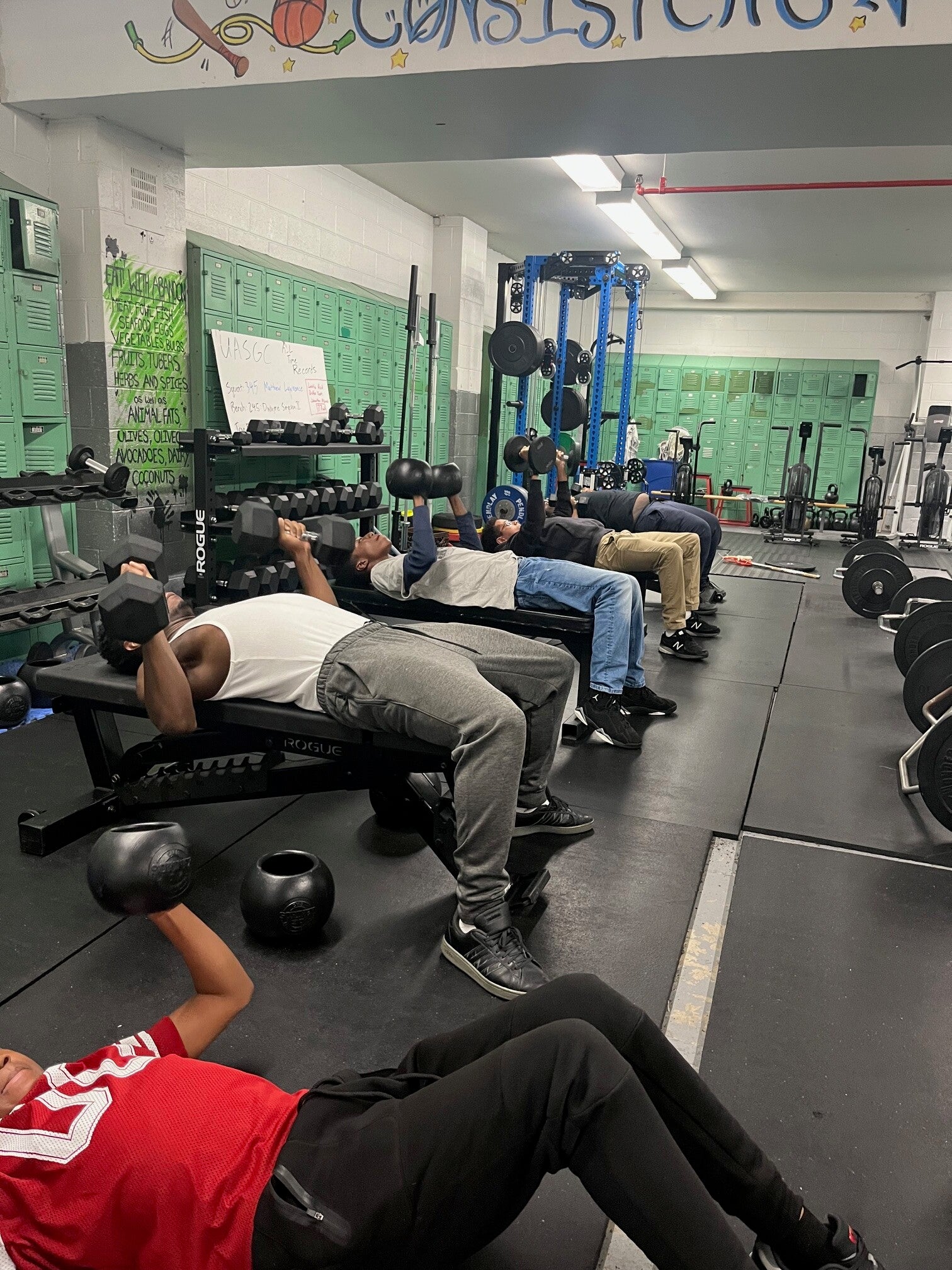
I aim to provide levels of difficulty for the same skill so that all students are challenged appropriately.
Examples by Unit
- Fitness Training:
- Level 1: Modified push-ups on knees
- Level 2: Standard push-ups
- Level 3: Decline or tempo push-ups
- Level 1: Modified push-ups on knees
- Soccer:
- Tiered dribbling (walking dribble → jogging dribble → speed with cones → 1v1 pressure)
- Tiered dribbling (walking dribble → jogging dribble → speed with cones → 1v1 pressure)
- Volleyball:
- Underhand serve from 10 ft → 20 ft → endline
- Bump to self 3x → partner bump → triangle passing circuit
- Underhand serve from 10 ft → 20 ft → endline
- Basketball:
- Layups without defense → light shadow defense → full-speed layups
- Layups without defense → light shadow defense → full-speed layups
- European Handball:
- Beginner passing: stationary chest/overhead pass
- Advanced passing: moving pass, give-and-go patterns
- Beginner passing: stationary chest/overhead pass
- Ultimate Frisbee:
- Tiered throwing (backhand 10 ft → 20 ft → 30+ ft accuracy zones)
- Tiered throwing (backhand 10 ft → 20 ft → 30+ ft accuracy zones)
- Football:
- 3-step throw → 5-step throw → rollout passing with defender
- 3-step throw → 5-step throw → rollout passing with defender
- Adventure Education:
Start with low-elements trust tasks → progress to higher-complexity team challenges
Differentiating by Equipment Modifications
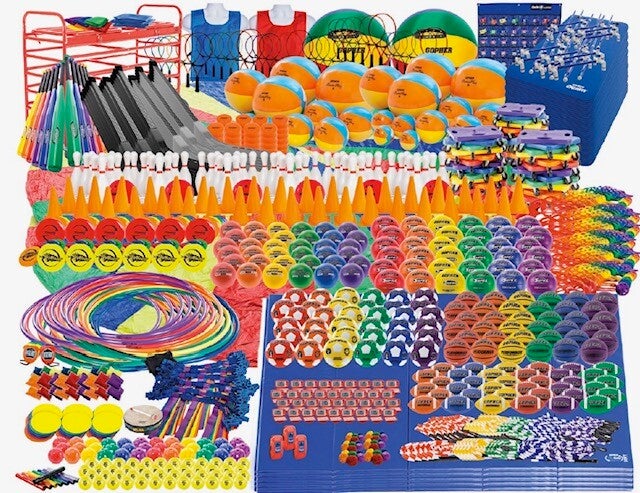
Adjusting equipment allows students to perform skills successfully and with confidence.
Examples
- Lighter or larger balls (volleyball trainer balls, foam balls for handball or football)
- Smaller playing spaces for students who struggle with movement or endurance
- Resistance bands of different tensions in fitness units
- Lowered nets in volleyball practice drills
- Different weight options for fitness circuits
- Short-handled vs. long-handled frisbees, depending on control needs
Equipment modifications are essential for IEP/504 students needing hand-over-hand support, reduced-impact activities, or safer equipment.
Differentiating by Rules & Task Constraints
At times, the rules must be adjusted to match students’ readiness levels.
Examples
- Fitness Training:
- Students choose between time-based or rep-based challenges
- Students choose between time-based or rep-based challenges
- Soccer:
- Limit touches for advanced players; unlimited touches for beginners
- Limit touches for advanced players; unlimited touches for beginners
- Volleyball:
- Allow a catch-and-drop for beginners during rallies
- Allow a catch-and-drop for beginners during rallies
- Basketball:
- Modify dribbling rules (e.g., beginners allowed 2 hands briefly in drills)
- Modify dribbling rules (e.g., beginners allowed 2 hands briefly in drills)
- Ultimate Frisbee:
- Increase stall count for struggling throwers
- Increase stall count for struggling throwers
- European Handball:
- Reduce defensive pressure for lower-proficiency groups
- Reduce defensive pressure for lower-proficiency groups
Rule changes help maintain high participation and high success rates.
Differentiating by Grouping Strategies
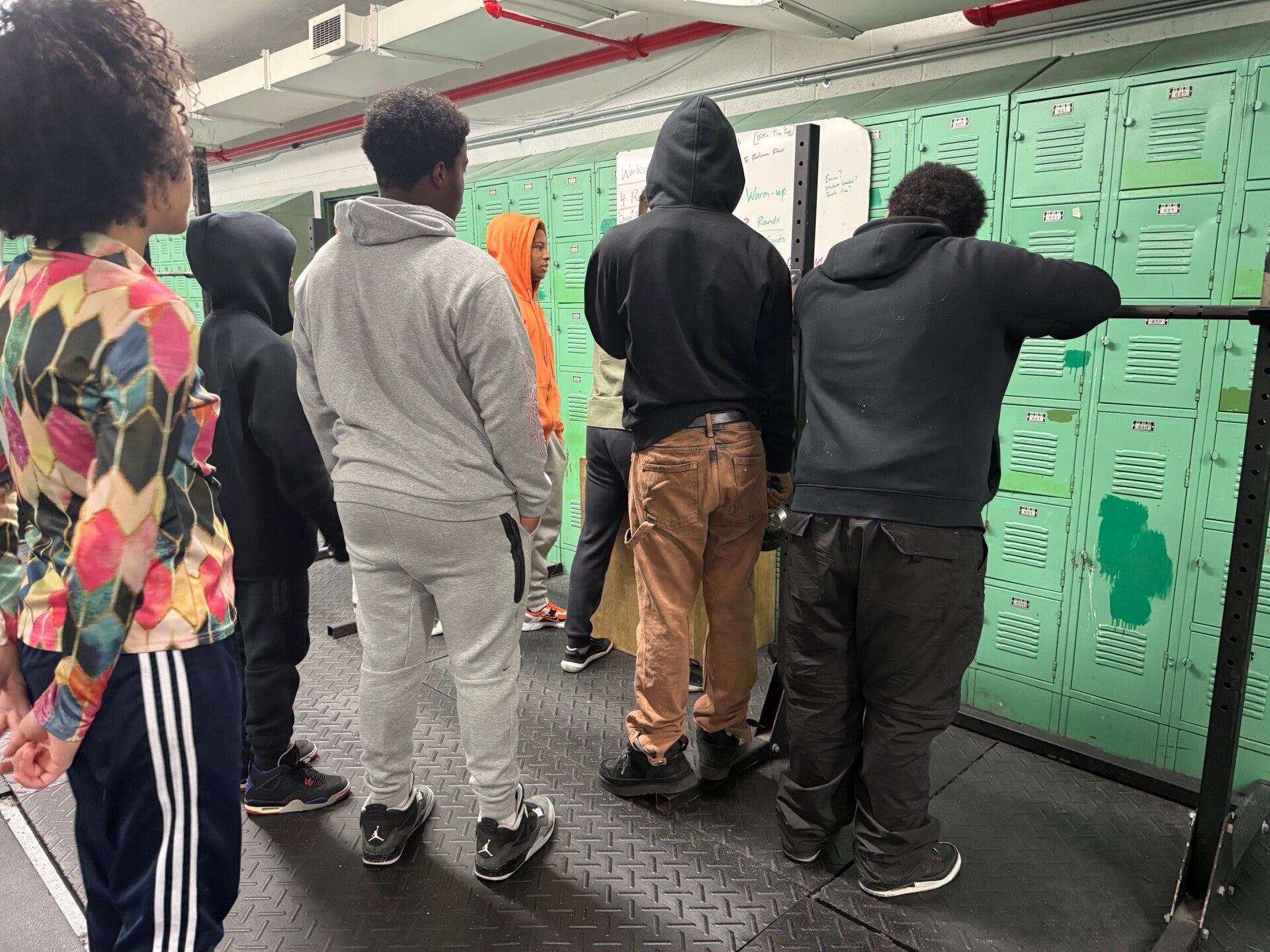
Grouping allows students to learn at their own pace or through appropriate peer modeling.
Methods
- Skill-based grouping (blue/green/yellow groups)
- Mixed-ability grouping for peer modeling
- Stations for students working on different drills simultaneously
- Leadership roles for advanced students (captains, equipment managers, demonstration leaders)
- Support roles for students with injuries or limited mobility (coaching cues, scoring, strategy boards)
Examples by Unit
- Ultimate Frisbee: Throwing stations of varied difficulty
- Volleyball: Passing triangles grouped by consistency level
- Adventure Education: Mixed teams to maximize communication and leadership
- Football: QB groups by throwing skill
Differentiating by Teaching Cues & Instructional Supports
This includes:
- Clear visual cues
- Demonstrations (teacher or student demonstrators)
- Video modeling (especially effective for volleyball & soccer)
- Step-by-step progressions
- Checklists and visual task cards
- Peer feedback rubrics
- Verbal scaffolds for ELL students
Examples
- Volleyball:
- Use cue posters (“Platform firm,” “Bend knees,” “Contact forearm”)
- Use cue posters (“Platform firm,” “Bend knees,” “Contact forearm”)
- Soccer:
- Footwork arrows for dribbling routes
- Footwork arrows for dribbling routes
- Fitness:
- Task cards explaining how to perform each exercise safely
- Task cards explaining how to perform each exercise safely
Differentiating by Product (Student Output)
Students can demonstrate mastery in different ways depending on learning preference:
- Participate in skill drills
- Complete a fitness log
- Create a strategy diagram (handball, basketball, volleyball)
- Track heart rate zones
- Write a self-reflection
- Participate in a game applying tactics
This is important for students with test anxiety or writing challenges.
Differentiating by Pacing
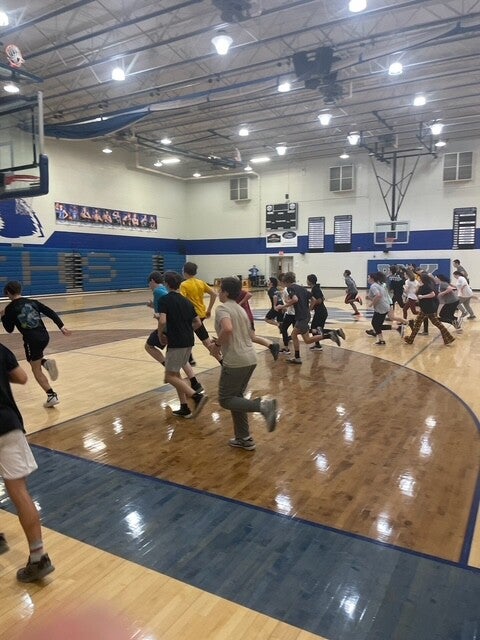
Students' progress through drills at different speeds.
Examples
- Basketball: Students move to the next dribbling challenge once they show control
- Volleyball: Students advance from wall passing → partner passing → moving passing
- Fitness: Students with higher conditioning complete longer or more intense circuits
Pacing differentiation ensures advanced students stay challenged while beginners build confidence.